


Strike me pink!
Were I a better comics blogger (which I’m not, no more’n I’m a poliblogger), you wouldn’t have had to have waited for me to read Sara’s LiveJournal in order to find this Comics Reporter link to news of a staggeringly monumental nature:
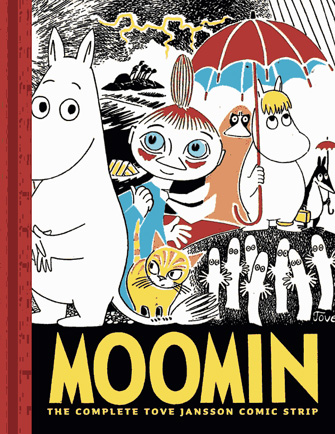



Give it up for the last honest libertarian.
Thanks to Jim Henley, you’ll never have to hear another ticking time-bomb scenario ever ever again.
Still a uniter, not a divider.
You learn a lot whenever you visit wood s lot; today, I learned I agree with the John Birch Society.
NORRIS: Generals Edwin Walker and Clyde Watts both attacked MAD; calling it Communistic. FACT magazine made it out that you counter-attacked the John Birch Society, in the article “MAD Interviews A ‘John Birch Society’ Policeman” from MAD #97, September 1965, because of the Generals’ statements. Was this true?
FELDSTEIN: No! Anti-Communist panic… Red-baiting… and the Cold War with Russia was going on at that time, reaching a peak… and like every other era, including today!... contained serious, frightening reactionary organizations and movements in support of those causes that were beginning to infringe upon our basic Constitutional Liberties and Freedoms. The John Birch Society was one of the more infamous and outstanding of those organizations… and invited, no, begged for a biting, critical, MAD satirical treatment… hence the article, “MAD Interviews a ‘John Birch Society Policeman’”... an extreme point of departure that stressed how the “John Birch Society” thinking… in the hands of a Law Enforcement Officer… could be devastating and dangerous to our Civil Liberties, etc.
Don’t waste good iron for nails, or good men for soldiers.
Ten thousand years of human history was as nothing to us when taking the steps to safeguard it might have interfered with the safety of our troops, or inconvenienced our operational parameters.
But embarrass a Republican donor, like David H. Brooks? Whose DHB Industries manufactures Point Blank Armor? Which is insufficiently supplied to our troops through a 500 million dollar contract? Whose product failures are at the heart of a leaked, top-secret study that found 80% of our dead troops might have survived with adequate armor? Whose main competitor, Dragon Skin, is favored by nine of the generals currently serving in Afghanistan? Embarrass the likes of a man who can hire and fire the likes of Aerosmith and 50 Cent for his daughter’s bat mitzvah by working with your parents to scrape together the $6,000 you need for the safer, better, non-issue stuff?
Well. Fuck you, soldier. The order has come down from on high: drop the non-issue armor, or your family will lose your death benefits. Fuck your safety; fuck your people; fuck the op. Some things in this world are more important than your brief life, rounded by a sleep.
Now that I’m up with 2.12—
—or 2.2.2, or whatever the cool kids are calling it, anyway, from the talented mind at  stutefish: your moment of Battlestar Zen—

Why does America hate America?
On the one hand, 52% of America supports impeachment of the president, assuming he wiretapped American citizens without judicial approval (which he did, has been doing since he took office, and intends to keep right on doing, dammit); on the other, Jonah Goldberg and his ilk see no problem at all with a complete abrogation of constitutional rights—assuming the abrogatee is a drug dealer, or a terrorist, or related to a drug dealer, or a terrorist, or could conceivably have dealt drugs or terror at some point, or, y’know, looks like they might have, or is just, heck, evil, because we all know evil when we see it, so long as it isn’t him, or anyone he gives a fuck about, he’s cool, so what the hell is your problem, you liberal no-goodnik?
Ceci n’est pas une prom dress.

Yes, that’s a real prom dress. No, it’s not on backwards. Here’s a photo from its native environment:

It bubbled up into the froth of the Zeitgeist about a year ago; you can read more about it in this Wizbang! thread, or this thread over at Go Fug Yourself, and one might find a diverting yet instructive ten minutes or so in comparing the tones and tenors of the two. (One might also find a diverting yet distractive ten minutes or so in perusing the catalog, if only to appreciate the way the bridal models are each paired with a tastefully naked hunk.)
Now, the reason I posted the picture back then was bubbling next to it in the froth: the story of Kelli Davis, who wanted to wear a tuxedo top for her high school senior picture, and not the drape-and-pearls the girls were supposed to wear; “She said she was uncomfortable to have her chest exposed in the photo,” as one news report put it. (And those who find the juxtaposition of the two a tad hyperbolic—


—are invited to ponder the designer’s koan: “He openly admitted that he would die before he let his own daughter out of the house like that, but said that ‘prom styles are very sexy’ these days and ‘girls want to look sexy like their favorite celebrities.’”)
Anyway: tough, said the principal, who banned the photo. Tough, said Clay School Superintendent David Owens, who went on to say, “There’s a dress code to follow—a dress code expected for senior pictures in the yearbook, and she chose not to follow them. It’s just that simple.”
Apparently, the use of tasers in schools is also just that simple; corporal punishment, however, not so much, because “We’re living in a sue-happy society these days.” —Kelli Davis threatened to sue, by the way, and even if she didn’t get her senior picture, Clay County girls from here on out can wear the tux, and boys the drape; the settlement reached mandates the school board “change its senior portrait policy, add sexual orientation to its non-discrimination policy for both students and teachers, distribute a copy of the new non-discrimination policy to all secondary school students, provide annual non-discrimination training that includes sexual orientation to all faculty and staff, and provide diversity training that includes sexual orientation to all junior high and high school students in the district.” —Which is maybe why a Clay County high school subsequently banned a student editorial called “Homosexuality is Not a Choice.” (Aw, cut ’em some slack. Rome wasn’t unbuilt in a day.)
As to why I’m bringing this up a year later? Beyond the fleeting pleasures of follow-up (and schadenfreude)? —Go to Google, bring up the image search, enter “prom dress.” You’ll see something like this:

Which is maybe why since I restarted the stat counter hereabouts, I’ve discovered that searches for “prom dress” constitute forty freaking percent of my traffic.
Anybody know how to unjuice Google?
It takes a heap of licks to strike a nail in the dark.
From Michael Schwartz at Mother Jones to Body and Soul to me to you:
Here is the Times account of what happened in the small town of Baiji, 150 miles north of Baghdad, on January 3, based on interviews with various unidentified “American officials”:
A pilotless reconnaissance aircraft detected three men planting a roadside bomb about 9 p.m. The men “dug a hole following the common pattern of roadside bomb emplacement,” the military said in a statement. “The individuals were assessed as posing a threat to Iraqi civilians and coalition forces, and the location of the three men was relayed to close air support pilots.”
The men were tracked from the road site to a building nearby, which was then bombed with “precision guided munitions,” the military said. The statement did not say whether a roadside bomb was later found at the site. An additional military statement said Navy F-14’s had “strafed the target with 100 cannon rounds” and dropped one bomb.
Crucial to this report is the phrase “precision guided munitions,” an affirmation that US forces used technology less likely than older munitions to accidentally hit the wrong target. It is this precision that allows us to glimpse the callous brutality of American military strategy in Iraq.
The target was a “building nearby,” identified by a drone aircraft as an enemy hiding place. According to eyewitness reports given to the Washington Post, the attack effectively demolished the building, and damaged six surrounding buildings. While in a perfect world, the surrounding buildings would have been unharmed, the reported amount of human damage in them (two people injured) suggests that, in this case at least, the claims of “precision” were at least fairly accurate.
The problem arises with what happened inside the targeted building, a house inhabited by a large Iraqi family. Piecing together the testimony of local residents, the Times reporter concluded that fourteen members of the family were in the house at the time of the attack and nine were killed. The Washington Post, which reported twelve killed, offered a chilling description of the scene:
“The dead included women and children whose bodies were recovered in the nightclothes and blankets in which they had apparently been sleeping. A Washington Post special correspondent watched as the corpses of three women and three boys who appeared to be younger than 10 were removed Tuesday from the house.”
Because in this case—unlike in so many others in which American air power utilizes “precisely guided munitions”—there was on-the-spot reporting for an American newspaper, the US military command was required to explain these casualties. Without conceding that the deaths actually occurred, Lt. Col. Barry Johnson, director of the Coalition Press Information Center in Baghdad, commented: “We continue to see terrorists and insurgents using civilians in an attempt to shield themselves.”
Notice that Lt. Col. Johnson (while not admitting that civilians had actually died) did assert US policy: If suspected guerrillas use any building as a refuge, a full-scale attack on that structure is justified, even if the insurgents attempt to use civilians to “shield themselves.” These are, in other words, essential US rules of engagement. The attack should be “precise” only in the sense that planes and/or helicopter gunships should seek as best they can to avoid demolishing surrounding structures. Put another way, it is more important to stop the insurgents than protect the innocent.
And notice that the military, single-mindedly determined to kill or capture the insurgents, cannot stop to allow for the evacuation of civilians either. Any delay might let the insurgents escape, either disguised as civilians or through windows, backdoors, cellars, or any of the other obvious escape routes urban guerrillas might take. Any attack must be quickly organized and—if possible—unexpected.
update— And then I wake up to this:
Pakistan on Saturday condemned a purported CIA airstrike on a border village that officials said unsuccessfully targeted al-Qaida’s second-in-command, and said it was protesting to the U.S. Embassy over the attack that killed at least 17 people.
Thousands of local tribesmen, chanting “God is Great,” demonstrated against the attack, claiming the victims were local villagers without terrorist links and had never hosted Ayman al-Zawahri.
Two senior Pakistani officials told The Associated Press that the CIA acted on incorrect information in launching the attack early Friday in the northwestern village of Damadola, near the Afghan border.
Citing unidentified American intelligence officials, U.S. news networks reported that CIA-operated Predator drone aircraft carried out the missile strike because al-Zawahri, Osama bin Laden’s top lieutenant, was thought to be at a compound in the village or about to arrive.
“Their information was wrong, and our investigations conclude that they acted on a false information,” said a senior Pakistani intelligence official with direct knowledge of Pakistan’s investigations into the attack.
Momus scores a twofer.
“Downtown train,” Everything But The Girl; “The Microörganism,” Boiled in Lead; “Chickenman,” Indigo Girls; “Attitude,” John Butler Trio; “Booze Olympics,” New Black; “Quark & Charm, the Robot Twins,” Momus; “Lucky Like St. Sebastian (live),” Momus; “He thinks I still care,” Kirsty MacColl; “Wonders of Lewis,” the Waterboys; “The Gymnast, High Above the Ground,” the Decemberists.
The anvil lasts longer than the hammer.
A sideline, an hors d’oeuvres, a carnival bark; but one takes one’s hammers where one can find them:
The public esteem of the profession of arms is at a rather low ebb just now—at least in the United States. The Soviet Union retains the pomp and ceremony of military glory, and the office class is highly regarded, if not by the public (who can know the true feelings of Soviet citizens?) then at least by the rulers of the Kremlin. Nor did the intellectuals always despise soldiers in the United States. Many of the very universities which delight in making mock of uniforms were endowed by land grants and were founded in the expectation that they would train officers for the state militia. It has not been all that many years since US combat troops were routinely expected to take part in parades; when soldiers were proud to wear the uniform off post, and when my uniform was sufficient for free entry into movie houses, the New York Museum of Modern Art, the New York Ballet, and as I recall the Met (as well as to other establishments catering to less cultural needs of the soldier).
Jerry Pournelle, ladies and gentlemen, piping up from 1979 to remind us that even if the ROTC wasn’t really in danger when Alito joined CAP, well, that doesn’t so much matter; we have always already been hating the military more. —That’s from “Mercenaries and Military Virtue,” his introduction to David Drake’s Hammer’s Slammers collection; therein we find the celebrated story “Hangman.” Take up your copies and turn with me now to page 184 of the Baen Books 1987 paperback edition:
“Never been shot in the head myself, Captain, but I can see it might shake a fellow, yeah.” Jenne let the whine of the fans stand for a moment as the only further comment while he decided whether he would go on. Then he said, “Captain, for about a week after I first saw action I meant to get out of the Slammers, even if I had to sweep floors on Curwin for the rest of my life. Finally I decided I’d stick it. I didn’t like the… rules of the game, but I could learn to play by them.
“And I did. And one rule is, that you get to be as good as you can at killing the people Colonel Hammer wants killed. Yeah, I’m proud about that one just now. It was a tough snap shot and I made it. I don’t care why we’re on Kobold or who brought us here. But I know I’m supposed to kill anybody who shoots at us, and I will.”
“Well, I’m glad you did,” Pritchard said evenly as he looked the sergeant in the eyes. “You pretty well saved things from getting out of hand by the way you reacted.”
As if he had not heard his captain, Jenne went on, “I was afraid if I stayed in the Slammers I’d turn into an animal, like the dogs we trained back home to kill rats in the quarries. And I was right. But it’s the way I am now, so I don’t seem to mind.”
Hammer? Anvil? —Context amongst yourselves.
Pieces of what, exactly?
I didn’t notice when James Frey’s Million Little Pieces hit the Oprah jackpot, but I wasn’t paying that much attention to the Oprah jackpot. But now that the Smoking Gun has gone and gotten itself on the front page of USA Today for calling him on his shit, well, I guess I am paying attention to USA Today. Or at least saw it out of the corner of my eye on my way to pick up a slice of pizza.
Anyway, I just wanted to remind all and sundry of this delightfully caustic review from a couple years back.
Malleability.
So almost three years after I heard of it, I finally have a copy of The Office (for which many thanks). And it is, indeed, exquisitely excruciating to watch (the moreso if you’re howsomever precariously perched in middle management yourself). But this isn’t about The Office. See, now that I’ve seen the character of David Brent in action, I now have a much more full appreciation of the Ricky Gervais Reveal.
The Ricky Gervais Reveal?
Well. The gentleman below, one Ricky Gervais, famous of course for the singular comic creation that is the character of David Brent,

was once the somewhat taller half of really-big-in-Japan-(and-the-Philippines) pop sensation Seona Dancing.

(Luckily, I’d already seen Momus’ post on the subject, or else John’s might have curdled my brain somewhat more than it did. Speaking of malleability.)
But this isn’t about the Ricky Gervais Reveal, either. It’s about another reveal, which will probably impress three people out there, and I’ve already told one of them in person, and another probably already knows. But who cares. —See, in the course of one thing and another (now that the zombies are put to bed) I was listening to the soundtrack of The Secret Garden, which has its moments, bombastic though they might be, and when “Winter’s on the Wing” came on, I happened to look over at the iTunes window, where the Artist field was highlighted, and did a doubletake. See, Martha’s brother Dickon, conjurin’ with that stick of his?

Well, there in the Original Cast, he was played by John Cameron Mitchell, who would some few years later rather famously pull a wig down from the shelf.

Rather a long way to go for thin bit of gruel, I’m afraid. —I did discover that Ricky Gervais is writing for the Simpsons,
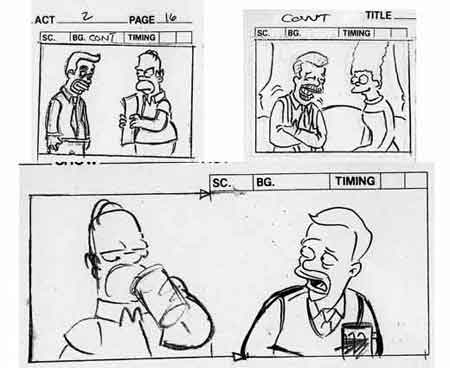
and also what John Cameron Mitchell’s up to these days.

Does that help?
The third, of course, will be a direct-to-iPod release in early 2009.
“[Peristere] added that the movie’s sales on DVD, which came out on Dec. 20, are running neck-and-neck with the hit comedy Wedding Crashers, which bodes well for a possible Serenity sequel.”
Yanking cranks.
Title 47, Chapter 5, Subchapter II, Part I, §223, “Obscene or harassing telephone calls in the District of Columbia or in interstate or foreign communications,” used to read as follows:
- a) Prohibited acts generally
- Whoever—
- (1) in interstate or foreign communications—
- (A) by means of a telecommunications device knowingly—
- (i) makes, creates, or solicits, and
- (ii) initiates the transmission of,
- any comment, request, suggestion, proposal, image, or other communication which is obscene, lewd, lascivious, filthy, or indecent, with intent to annoy, abuse, threaten, or harass another person;
- (B) by means of a telecommunications device knowingly—
- (i) makes, creates, or solicits, and
- (ii) initiates the transmission of,
- any comment, request, suggestion, proposal, image, or other communication which is obscene or indecent, knowing that the recipient of the communication is under 18 years of age, regardless of whether the maker of such communication placed the call or initiated the communication;
- (C) makes a telephone call or utilizes a telecommunications device, whether or not conversation or communication ensues, without disclosing his identity and with intent to annoy, abuse, threaten, or harass any person at the called number or who receives the communications;
- (D) makes or causes the telephone of another repeatedly or continuously to ring, with intent to harass any person at the called number; or
- (E) makes repeated telephone calls or repeatedly initiates communication with a telecommunications device, during which conversation or communication ensues, solely to harass any person at the called number or who receives the communication; or
- (A) by means of a telecommunications device knowingly—
- (2) knowingly permits any telecommunications facility under his control to be used for any activity prohibited by paragraph (1) with the intent that it be used for such activity,
- (1) in interstate or foreign communications—
- shall be fined under title 18 or imprisoned not more than two years, or both.
Of course, you’ll want to know what a “telecommunications device” is.
- (h) Definitions
- For purposes of this section—
- (1) The use of the term “telecommunications device” in this section—
- (A) shall not impose new obligations on broadcasting station licensees and cable operators covered by obscenity and indecency provisions elsewhere in this chapter; and
- (B) does not include an interactive computer service.
- (1) The use of the term “telecommunications device” in this section—
Clear enough?
Ah, but now, thanks to H.R.3402, the (otherwise estimable and indeed highly necessary) Violence Against Women and Department of Justice Reauthorization Act of 2005, we get to take up our red pens and amend the above. Turn with me to Sec. 113 for the changes:
- (a) In General- Paragraph (1) of section 223(h) of the Communications Act of 1934 (47 U.S.C. 223(h)(1)) is amended—
- (1) in subparagraph (A), by striking ‘and’ at the end;
- (2) in subparagraph (B), by striking the period at the end and inserting ‘; and’; and
- (3) by adding at the end the following new subparagraph:
- ‘(C) in the case of subparagraph© of subsection (a)(1), includes any device or software that can be used to originate telecommunications or other types of communications that are transmitted, in whole or in part, by the Internet (as such term is defined in section 1104 of the Internet Tax Freedom Act (47 U.S.C. 151 note)).’.
Now are we clear?
—No: it’s not illegal now to post anonymously to the internet, on the grounds that someone somewhere might be annoyed. Then, Declan McCullagh never said it was. He was if somewhat alarmist nontheless pretty clear up front that the intent to annoy (or abuse, or threaten, or harass) was key. Those who pooh-pooh the idea this law would ever be used against the colorfully pseudonymous commenters at Eschaton or Daily Kos or TBogg (or Little Green Footballs, or the Free Republic, or the Anti-Idiotarian Rottweiler) underestimate, I think, what a target-rich environment comment threads have become for abuse and threats and harrassment, and sheer downright intentional annoyance; miss, in fact, the very raison d’etre of the internet troll. —The most recently celebrated eruptions of accusations of abuse (and annoyance) depended, it’s true, on mendacity, or at least a criminal inability to parse satire and provide context—but while that might get you acquitted, it won’t pay your legal bills.
Atrios—I mean, Duncan Black—has it pretty much right, I think. Unless His Imperial Presidency signed one of Strip-Search Sammy’s backsie specials, this law will either be interpreted in basic good faith, following the spirit of its context and intent (“Preventing Cyberstalking,” says the subsection’s title)—or it will be adjusted drastically, following a nasty and otherwise unnecessary legal battle. Or both. It (as ever) remains to be seen. —Meanwhile, here’s grounds for one of those perennial conversations we all ought to keep having, about moderation andd politesse and community, and speech, and the illusory freedoms thereof. Annoying, I know, we’ve been over it all before and will again, but chop the wood and carry the water, okay?
(Oh, who are we kidding. We’re all going to have to keep identity affidavits and political permits on file whenever we want to blog about anything more inflammatory than knitting. We’ll be like porn stars with those USC 2257 statements at the bottom of every page. Bots will ping us in IM: “Papers, please.” What a brave new world! If only those dam’ libertarians hadn’t made libertarianism so selfishly stupid…)
Heh. Indeed.
Y’know, I’d long since thought we’d had the last word on the uselessness of Instapundit, and moved on to seek out the last word on Hinderaker (there are so many to choose from; Glenn Greenwald pretty much nails it, though, so nevermore need we sully our lips with his name again)—but Harry Hutton had to go and prove me wrong. —Also: Sebbo has the last word on a particular linguistic fallacy, and you are reading Click opera, right? Every day?


.JPG)