


Vive la différence.
Trouble with Ted Chiang’s seemingly pat differentiation is most stories by construction must take their protagonists personally, and see them as special snowflakes: they are, after all, the people whose story is being told, without whom the very universe would not exist. (Think a moment how so much SF ends up as fantasies of political agency. There’s the storyable, world-shaking stuff!) —I like Jo Walton’s better: fantasy’s the stuff we know, in our bones, very much because it isn’t real; SF is that much harder because every jot and tittle you set down must always be checked, and checked again: like anything else that’s solid, science never stops melting into air…



Mission accomplished.
“So the new laws are inconveniencing law-abiding people who want to treat cold and allergy symptoms, have had either zero or a positive effect on meth use, have lured new people into the meth trade, and have created a bigger market for smuggling meth and meth ingredients into the country from Mexico.” —Radley Balko
It’s all her fault!
Via a one-off link over at Alas, an update to pronoun-sexing: apparently, Anne Fisher’s the one who first advocated “he” as the gender-neutral pronoun for English, upset as she was over numeric inconsistencies with then-popular “they.” —Or, well, maybe not.
Overflowing.
So. The ninth is pottery and copper. —Cups, then, if we were matching trumps. Like I said: 2011 will be a year.
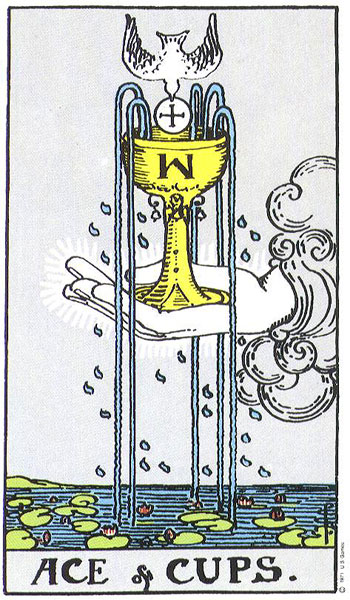
Extispicy.
From various browser tabs, left open after a morning’s desultory surf—
The American Society of Magazine Editors has this yearly conference where they all get together and jerk off and talk about where they are and where the culture is. So they invited me down a few years ago and asked me to talk about the Esquire covers and tell everybody to stop doing terrible covers, or something like that. I was like, “So you want me to come down and bust balls? Okay.” Just about every editor and publisher in America was there, and I just ripped their eyeballs out. Every magazine except maybe Vanity Fair and the New Yorker was complicit in the Iraq war. I gave them the whole thing about weapons of mass destruction and said, “Every one of you sons of bitches is complicit in what’s going on over there.” They were all, “Oooohhhh.” Ten minutes later I did a little bit more of it [mimes clapping his hands together to demonstrate their applause], and then half an hour later I really ripped into them about the war and I got a standing ovation. All the while I’m talking about why they can’t do good covers, and I’m showing mine at the same time.
And in the end?
Afterward there was a line—about 200 of them—waiting to talk to me. I’m signing stuff, and it’s all bullshit! They all keep doing the same crap. They’re not even trying. It’s so ignorant. Why would you want your magazine to look like the other guys’ magazines? It doesn’t make any sense. Why wouldn’t you want to run a cover image that rips your lungs out?
—Vice, the George Lois interview
Reader Gary P sent me an e-mail about a Planet Money list of “must read” economics books. I had toyed with posting on it, held off because I have a wee conflict of interest as an an author of a book decidedly critical of mainstream economics, but the biases evident in the NPR piece have been nagging at me.
If nothing else, this tally should dispel any idea that NPR is left-leaning.
—Yves Smith, “NPR’s ‘Must Read,’ As in Orthodoxy-Promoting, Economics Books”
Lewis’ need to anchor his tale in personalities results in a skewed misreading of the subprime crisis and why and how it got as bad as it did. The group of short sellers he celebrates were minor-leaguers compared to the likes of Goldman Sachs, Deutsche Bank and John Paulson. But no one on the short side of these trades, large or small, should be seen as any kind of a stalwart hero and defender of capitalism. Circumstances converged to create a perfect storm of folly on the buy side, beginning with essentially fraudulent mortgage originations at ground level, which the short-sellers—whether trading at the multimillion or multibillion dollars level—took advantage of. That they walked away with large profits may be enviable, but there was nothing valiant about it. In the end, Main Street, having been desolated by a mortgage-driven housing bust, now found itself the buyer of last resort of Wall Street’s garbage.
—Yves Smith, “Debunking Michael Smith’s Subprime Short Hagiography”
The last week has seen an endless discussion, within the political blogosphere, about the meaning of rhetoric, extremism, and what is acceptable discourse. I’m on break now, so I’ve been more attentive than usual. I find I can barely express what a profound failure, on balance, the conversation has been. Bloggers fail to have this conversation honestly because they are incapable of seeing or unwilling to admit that the political discourse, in our punditry, lacks a left wing.
—Freddie deBoer, “the blindspot”
When the police start killing random citizens out of spite, and then a newly revolutionary army goes a head and deputizes everyone with a knife or stick, it really brings out the worst and best in people.
There was one drunken fat man, whose breath smelled of liquor who was wielding dual butcher knives. He kept threatening other volunteers and vandalizing things and eventually people made him leave.
Most of the people were extremely inspirational and there were some people who took it upon themselves to be sort of leaders or messengers and ran from corner to corner, letting people know what was up. In my neighborhood the people who were doing this were two old men, and (implausibly) one young woman.
The young woman, named Leila spoke some English. She said “you are in our country, in our revolution” I started to say “I just don’t want anyone taking my shit or shooting at my house” but she cut me off “you should get citizenship here, like Che in Cuba.”
My motives are far from revolutionary, and she was totally busting my balls, but it still felt nice.
—methalif, “Next Morning”
For the media dissemination of the uprising, yes, the Internet has replaced the media. The Tunisians have become the reporters on the social networks. Five years ago, without Facebook and Twitter, the same uprising would have been smothered.
The demands of the people: down with Internet censorship, freedom of expression… down with the corrupt regime.
—S, from Karin Kosina vka kyrah’s “The role of the Internet in the revolutionary uprising in Tunisia: a conversation with someone who was there”
As with most nationalist parties resisting colonial rule in the Middle East, the leadership of the Neo-Destour was initially comprised of a small section of the intelligentsia, university graduates who resented the colonial jackboot and the Tunis-based grand familles who connived with the colonists. These educated elites were offspring of the emerging Sahel bourgeoisie, who needed to mobilise the peasantry and the emerging proletariat, without fundamentally altering the relations of subjection and exploitation in which the latter were held. As usual, there was an emphasis on regenerating national culture, and modernising the better to resist colonial domination. But, there was also the particular element of hatred for the crusading policy of the French Catholic church under Cardinal Lavigerie, the French empire’s supernal advocate. Thus, the Neo-Destours emphasised the protection of Islamic traditions, attempting to mobilise them as elements of the national identity they sought to “restore.”
—lenin, “The rise and fall of Tunisia’s Ceauşescu”
“Tastemakers beware,” the subhead warns, “the audience is no longer interested in your opinion.”
What? Say it ain’t so! Mr. Gabler begins with the assertion that, “as anyone who has ever wiggled in his seat at a classical music concert or stared in disbelief at a work of conceptual art can attest, culture in America has usually been imposed from the top down.” And what about the vastly larger segment of the population who avoid such egghead pastimes altogether? They are the heroes of Mr. Gabler’s article, which is about how an anonymous band of “democrats” overthrew the forces of “official” culture as embodied by “media executives, academics, elite tastemakers and of course critics.”
These people, also characterized as “cultural imperialists” and “commissars,” have conducted a long and tireless campaign to force everyone else to look at conceptual art and go to classical music. “For over 200 years,” Mr. Gabler writes, “normal Americans have longed to exercise their independence and free themselves form the tyranny of the elitists.” And now, apparently, that nightmare of oppression is over.
—A.O. Scott, “Defy the Elite! Wait, Which Elite?”
They can’t be human, but they look so human.
—Christopher Higgs, “Notes on Frans Zwatjes’s Living (1971)”
According to the Inglipnomicon, the rise of Inglip and his faith began on January 8th, 2011, with the following events.
—Susana Polo, “Praise Lord Inglip, From Whom All Blessings Flow”
Leave Sarah alone!
One of the more frustrating things about the “blood libel” furore was seeing so many people knock Sarah Palin and her speechwriters for the ghastly misuse. She just read it from a teleprompter, people. —C.W. Anderson does the legwork for you.
Few, and carefully considered, and he broadcasts them like a beacon in every weather.
Martin Seay (of the Ke$ha essay linked above for the next little while) has written other things, of course; of course he has: he has a blog! —Today I read this longer piece on Norman Rockwell (and Spielberg, and Lucas, and a whole host of somethings else), and if you have a few minutes cleared at some point or other in the next little while, I urge you to do likewise.
You can add up the parts;
you won’t have the sum.
So you can anyway imagine the grin on my face when I tripped over Mendlesohn’s Corollary to Clarke’s Third Law:
Any sufficiently immersive fantasy is indistinguishable from science fiction.
Problem being she’s talking about immersive fantasy, and she classes or tends to class urban fantasy, the thing we’re pointing to, as intrusion.
—I’m gonna have to get into this, aren’t I.
Farah Mendlesohn sat down to grapple with the rhetorics of fantasy; she stood up with a taxonomy for organizing all of fantastic fiction, every last drop of it, based on the narrative strategies, the rhetorics used to establish the relationship between the normal, the disputable here of us, and the numinous, the ineluctable there beyond the fields we know—a sound basis for a system of describing (and not prescribing) fantasy as she is wrote, you’ll agree. (—What else is there?) —Her taxonomy, then, proposes four means whereby this relationship is inscribed, interrogated, upended and maintained:
- the portal/quest, in which we go from here to there;
- the immersive, in which there is no here but there;
- the intrusive, in which there comes here and must return;
- the liminal, in which there was here all along.
So. Four. (With yes an implied fifth, and an obvious sixth. —But for now, four.) —Why only four? Why these four? —Well.
A while back I found myself idly toying with ways to structure and organize sexual imagery, energy, symbols and roles, flows of power and expectation, something a step or two beyond the brutally stupid dichotomy we’re mostly stuck with, the masculine, the feminine, which all too often boils down to the merely phallic. —Why, even Freud, who thought long and hard about this sort of thing, once said,
if we were able to give a more definite connotation to the concepts of “masculine” and “feminine,” it would even be possible to maintain that libido is invariably and necessarily of a masculine nature, whether it occurs in men or in women and irrespectively of whether its object is a man or a woman.
And not all the handwaving footnotes in the world can keep me, even here in the comfortable lap of 21st century cisgendered heteronormative privilege, from calling that out as the most specious of bullshit, a definition desperately trying to maintain the worldview in which it’s relevant. —Nonetheless, he did, and it did, and look where it’s all gotten us: bros before hos, amirite?
Anyway. At about the same time I was re-reading Red Mars, and so once again got caught in the seductive grip of the Greimas semantic square:

Proposition S; the opposite of S; the negation of S; the negation of the opposite of S. No simple dichotomy, this! (And it’s just the first stage.) —What I ended up with, then, looked something like:

I tried to go with terms at once as suggestive and yet sex- (and gender-) inspecific as possible—wait, you’re saying, the four, what on earth does all this—with the penetrating, and the enveloping, I mean, any of us, male, female, straight or gay or polymorphously whichever, cis or trans or not at all partaking, any of us—fantasy, you’re saying, urban fantasy, what does this have to do with—we can all identify with penetrating, or enveloping (I almost went with swallowing, but that’s a bit too too, you know?), with being enveloped, with being penetrated; we can all see them as valid stances, as desires, as starting points each as proper as the other, right? —Seriously, you’re saying, what does this have to do with the urban fantasy as sf and that taxonomy you were, and I’m saying patience, watch, count it off, do the math, look at them over there, they figured it out—
It’s a trifle, is what it is, a toy. I mean, I trust it demonstrates how easily the brutally stupid dichotomy can be disrupted, but Christ, anyone who thinks about it half a moment can see that. —And yet it keeps coming back, doesn’t it? Men do this. Women want that. Way of the fucking world. —I mean look where little ol’ cisgendered mostly heteronormative masculine me put the penetrative end of things, huh? Proposition S. Look how everything else gets othered by that placement, with all the opposing and the negating. —“The power involved in desire is so great,” says Delany, responding to (among other things) that Freud quote above,
that when caught in an actual rhetorical manifestation of desire—a particular sex act, say—it is sometimes all but impossible to untangle the complex webs of power that shoot through it from various directions, the power relations that are the act and that constitute it.
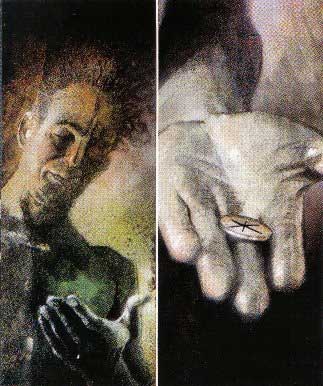
Sex and sexuality, desire and power, it’s all too terribly complicated for simple logical constructs to contain. The models are all wrong and useless. You start to feel like Two-Face in the Grant Morrison – Dave McKean Arkham Asylum, weaned by well-meaning psychotherapists from the binary limitations of his ghastly decisive coin to the six-fold options of a die, multiplying the ramifications of every choice he makes up to the paralyzing forest of possibilities in a decision-making system based on the fall of a pack of Tarot cards—he pisses himself, unable to decide which way to turn. No wonder the brutally stupid dichotomy keeps coming back! It’s wrong, but at least it gets things done!
But: if we replace the sex with rhetoric—

Two sides, normal and numinous, here and there; the membrane between them (for how else could we tell the two sides apart, or that there were two at all? —Remember: the rhetorics each in their own way inscribe and maintain the relationship between the two, which depends upon that difference); the crack within the membrane (for how else could the light get in? how else would it all be storyable?)—just adjust which is where as you go and oh do let’s be blunt about it: we (along with the protagonist) set out from the normal through a portal on a quest to penetrate the numinous; we (along with the protagonist) are utterly immersed in the numinous as it envelops us; we (along with the protagonist) are intruded upon by the numinous as it penetrates our normal world; we (along with the protagonist) find the numinous enveloped within us, a tremulous limen within our grasp. —Take the portal/quest, the ur-fantasy for most of us, and set it in the role of proposition S; the rest, oppositions and negations, fall neatly into place.
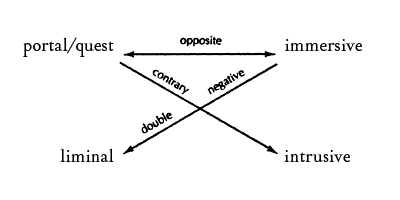
Now one of the reasons I like arranging Mendlesohn’s taxonomy this way is it helps to visualize the pitiless logic of here and there that underlies it all (oh, but be careful! Such logic is seductive, and narcissistic: in love with itself it ignores anything that isn’t, and always risks turning brutal and stupid. There is an implied fifth, of course: everything else. And also the obvious sixth: none at all. But for now let’s stay in the square). But also: there’s the rhetorics primarily associated with each type:
- the portal/quest, as previously discussed, depends upon the didactic to tell the world as it is to its protagonist, and us;
- the immersive plays with ironic mimesis, its po-faced protagonist taking for granted things we’d find most extraordinary;
- the intrusive pushes and pulls its protagonist (and us), depending on latency (for irruptions must always prove short sharp shocks);
- the liminal eschews its protagonist and reaches up to us direct, through the dialectic between the reader and the work.
Take these, hang them about the square, and lift it all up to the next stage (I did warn you that the square was but the first move we could make):

And we start to see some of the moves hinted at in the taxonomy, the ways the sets can fuzz, and not: that the didactic of the portal/quest can shade to ironic mimesis, as its protagonist learns the ways of the world, and can reach even for an archly knowing dialectic with the reader, but can’t except in the very opening pages do much with latency—there is a door and we will go through it in this scheme of things. Why wait? —That the ironic mimesis of the immersive can always go didactic to drop some (forgive the term) science on us, or play with the latency of the wonders it cannot admit it delivers, but can never reach for that dialectic which breaks the seals between its there and our here, threatening the illusion of immersion. —That the latency of intrusion can use both ironic mimesis and a knowing dialectic in its arsenal of pushes and pulls, but can never come right out and and say what’s happening, flatly, and expect to pull it off. —That the liminal can use—must use—both latency and the didactic to keep us at once engaged and at bay, but would (ironically) find ironic mimesis too open and direct an admission of the wonders it’s always on the edge of revealing.
As, I mean, a for instance. Don’t take my word for it. I’m just fucking around at this point. —Christ, I haven’t even gotten into how this all does and doesn’t work with the Cluthian triskelion. —Mostly what I need for you to understand before we take our next step is this: that Mendlesohn sees the immersive school as having the most in common with the “closed” worlds of SF, which is what her corollary means, and why my grin’s provisional at best; that she classes urban fantasy as intrusion, as stories of push-me–pull-you latency, and thus not SF at all, at least not in that sense.
But—
As Mendlesohn herself notes (citing among other works Perdido Street Station,) an immersive fantasy can host an intrusion.
I’d argue in turn that an intrusion not successfully beaten back must then become an immersion.
Thus as to how it is that urban fantasy must necessarily be SF, you see—
yes he said yes he did Yes.
“—and the tall coves and the magazine in the morning Uncle Thomas and Aunt Dahlia and Uncle George and the devil knows who else from all the ends of Jolly Old and the colonies and the school girls all clucking outside the girls school where I may have said one or two things amiss and the poor Drones members slipping half asleep into their drinks the vague fellows such as Bingo asleep in the shade on the steps of Twing Hall waiting for the sermon handicap to begin—” —Molly Bloom Wooster
Woe. Mirth. Marriage. Birth. Christening. Dearth. Heaven. Hell. The Devil His Own Self.
The house lights are flashing, folks; Chase, Book Two of Dicebox, is now underway. (—But stop a moment on the way to your seats: bound-paper copies of Wander, Book One, are now available for pre-order in the lobby.)
Wer doin it worng.
A particularly powerful Glenn Greenwald column commended to your attention.
Fuck a bunch a God.
Cindy Jacobs is a snake-oil huckster with a stack of unsold books to move who’s decided to tell us all that the blackbirds of Beebe were slaughtered by God because we went against His will and repealed Don’t Ask, Don’t Tell.
To which I can only say, God? Next time You want to send a message? —Try Western Union. The only moral, ethical, righteous, human response to a God that is this cruel and this petty and this smarmily vain, this pathetic, is to turn and walk away.
“In a just universe, you burn in Hell. Forever.” —If so, dear God, fuck You. You made us better than You knew.
Winter finds out what summer lays up.
Reading too much to make up for some time when I wasn’t reading nearly enough. Looking back over recent scenes and grimacing at the clangor of the language; didn’t I hear any of that when I set it down? No? At least I’ve pressed on past what there was of no. 12 last week. —Also, last week I set up the new bookshelves and now my office-cum-library is finally for the most part settled; there is a place for nearly everything, and nearly everything is in its place; but if I buy another armload of books I’ll need another set of shelves, dammit. (The Spouse asks whether I’ve thought of taking some back, and laughs pitilessly at my quizzical confusion. —Back? Back where?) —Waiting, waiting: that one thing depends on year-end meetings pushed into the year begun, the one story out making the rounds still hangs fire (almost six months gone, now): perhaps I should get more than a line down on the next? If writing no. 12’s like pulling teeth? But no: the web is a customer service medium and real editors ship, dammit, and don’t talk to me about teeth. —At least I’m sparing you my insights into Mary Poppins as an urban fantasy. —I’m feeling the itch to redesign, to rip the pier and the city down to the foundation stones and rebuild it all leaner and cleaner; it is to be hoped good sense will prevail in this (as in all things), but the nights are long these days. —Anyway, that’s by me. How’s your discontent?
This still isn’t about steampunk, dammit.
But via Jess Nevins I learn of Beyond Victoriana, dedicated to “multicultural steampunk and retro-futurism—that is, steampunk outside of a Western-dominant, Eurocentric framework.” —Updates every Sunday and Wednesday.
Testify.
Chairperson
Mr. Slackmeyer, wouldn’t you agree that the most indefensible aspect of your tax cut proposals is the unconscionable way in which they favor the rich?
Phil Slackmeyer
No, sir, I certainly would not. If we’re going to avoid an economic Anzio, then we have to move boldly. We can’t afford to engage in a fiscal Battle of Midway without our captains of industry! From past experience, we know that the well-heeled are the only class that can be depended on to put their tax cuts into savings and investments.
Chairperson
And the poor?
Slackmeyer
Studies show they tend to blow it all at the track.
The best of the web.
But what happened inside the Starlight Lines employee forum was even stranger than that. Because it was buried one password and six clicks into the site, only a few dedicated people found it, and found each other. And once they were there, they started roleplaying Starlight Lines, and didn’t stop evolving a long and bizarre narrative for the next thirteen years. When TDV died I moved the forum to my own hosting; every so often one of the players will poke me because something’s broken, and I’ll eventually fix it and they can carry on with their adventures. It’s been thirteen years of hosting an accidental community. It’s somewhat like ignoring the vegetable drawer of your fridge for a year, then opening it to find a bunch of very grateful sentient tomatoes busily working on their third opera. It’s one of the most remarkable things I’ve seen on the internet and I’m honoured to have inadvertently helped create it, not least because it got me a few fun speaking gigs.
That’s Yoz Grahame, webhacker for the old Douglas Adams Starship Titanic game, showing up in a massive thread about the game to drop some backstory, of which the above is just an amuse-gueule.